
A leaking hot tub can be frustrating, especially when you are not sure where the water is coming from. Sometimes the cause is simple. In other cases, the leak may sit behind panels, around pipework, near the pump or inside the cabinet where it is harder to spot.
At South East Hot Tubs, we help customers with hot tub leaks, pipework issues, pump problems and wider repair work. If your tub is losing water, making unusual noises or no longer running as it should, it is worth getting the issue checked before it leads to further damage.
This guide explains the common causes of a leaking hot tub, what you can check safely, and when to book a professional repair visit.
Why Do Hot Tubs Start Leaking?
Hot tubs can leak for several reasons. Over time, regular use, vibration, water pressure, temperature changes and chemical imbalance can all affect the parts inside the system.
A leak may come from:
- Damaged pipework
- Worn seals
- Loose unions or fittings
- A pump seal fault
- Jet connections
- Heater connections
- Filter housing
- Cracked plumbing
- Age-related wear
- Freeze damage after cold weather
- Poor water chemistry affecting seals or components
Some leaks appear suddenly. Others start slowly and become more noticeable over time. If the water level keeps dropping after you refill the tub, there is likely a fault that needs checking.
Common Places A Hot Tub Leak Can Come From
Finding the source of a hot tub leak is not always straightforward. Water can travel through the cabinet before it appears outside the tub, which means the visible wet patch may not be the true source.
Here are the areas we commonly inspect during hot tub leak repair work.
Pipework and Plumbing
Hot tub pipework carries water around the system between the pump, heater, jets and filter areas. If pipework cracks, moves or comes loose, water can escape into the cabinet.
Leaks in pipework may be caused by age, pressure, poor previous repair work, movement during transport or cold weather damage. In some cases, pipework leaks are hidden behind insulation or panels, which makes professional inspection useful.
Seals, Fittings and Unions
Seals and unions help keep connections watertight. Over time, seals can wear, flatten, crack or move out of position. Fittings can also loosen through vibration and regular use.
A small leak around a union or seal may not look serious at first, but it can get worse if the tub continues running. If you notice water collecting near the base or around access panels, it is worth booking an inspection.
Pump Area
The pump is one of the hardest-working parts of a hot tub. It moves water through the system and helps maintain flow, pressure and circulation.
A leak near the pump may come from the pump seal, unions, connected pipework or nearby fittings. Pump faults can also cause noise, weak pressure or poor circulation, so it is worth checking the system properly rather than only dealing with the visible water.
Jets and Jet Bodies
Jets are another common leak point. Each jet connects to pipework behind the shell, and seals around the jet body can wear or fail.
A leaking jet can be difficult to confirm without removing panels or inspecting behind the cabinet. If the water level drops to the same height as a particular jet, that can sometimes give a clue, but a proper check is still the safest route.
Heater Connections
If water is leaking around the heating system, the issue may involve connections, seals, sensors or nearby pipework. Heating issues can also appear alongside leaks, especially if low water flow affects the system.
If your hot tub is leaking and not heating properly, stop using it and arrange a repair visit. Water and electrical components should always be treated carefully.
Filter Housing
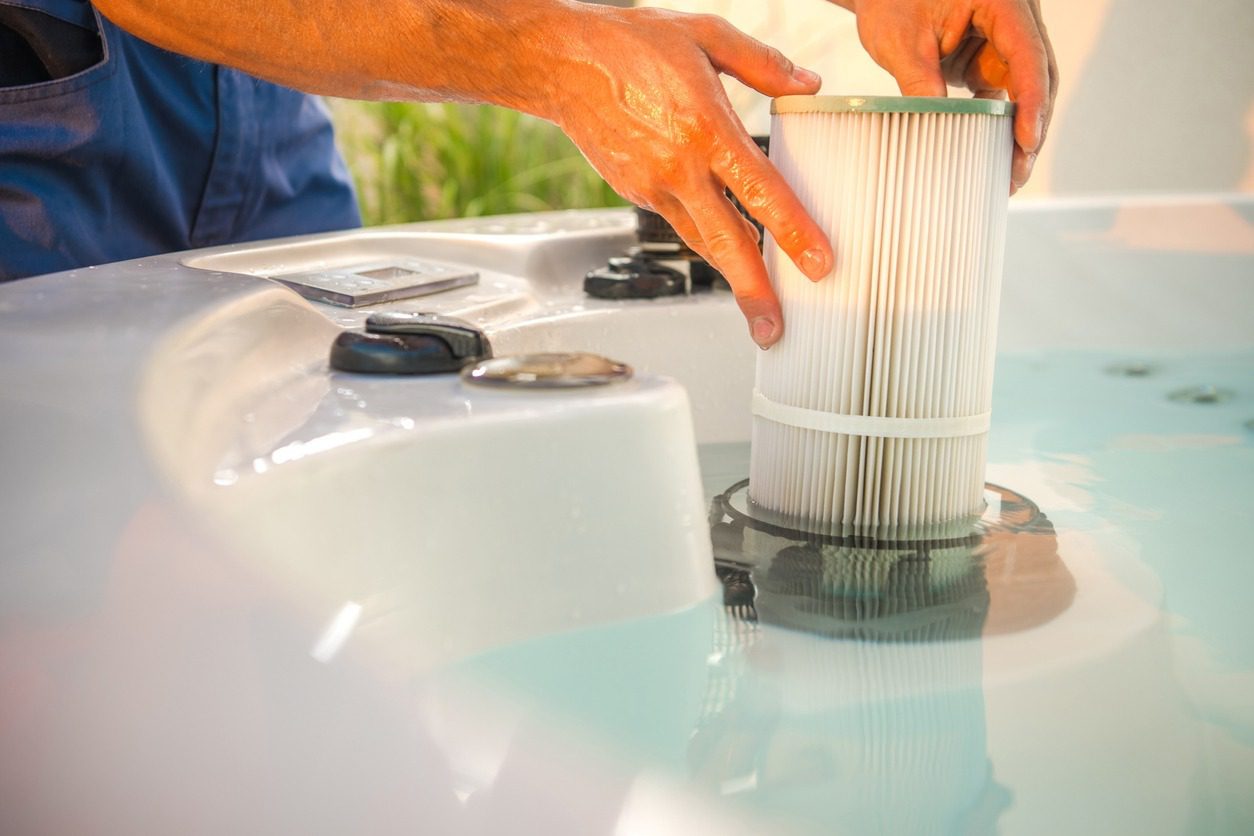
Leaks around the filter housing can happen when fittings, seals or surrounding components become worn or loose. You may also notice poor water flow, cloudy water or repeated filter problems.
If the filter area does not sit properly or water is escaping around it, the system needs to be checked before the problem affects circulation.
Can You Check A Hot Tub Leak Yourself?
There are a few simple checks you can do safely before booking a repair. These checks may help you understand what is happening, but avoid removing panels, touching electrics or working inside the system unless you know what you are doing.
You can check:
- Whether the water level drops when the tub is switched off
- Whether water collects around one side of the base
- Whether the leak appears near the pump access area
- Whether the filter is seated correctly
- Whether there is visible damage around the cabinet
- Whether the water drops to the same level each time
- Whether the tub is also showing error codes
- Whether the water is cloudy or difficult to balance
If the leak is small, do not ignore it. A slow leak can still damage internal components, decking, patios, garden areas or electrical parts if left untreated.
Why You Should Not Ignore A Leaking Hot Tub
A leaking hot tub rarely improves on its own. The longer it continues, the more risk there is of further damage.
A leak can lead to:
- Water loss
- Pump strain
- Heater issues
- Poor water flow
- Damage to internal components
- Electrical risk
- Damage to decking, patios or garden areas
- Higher repair work later
- Poor water quality
- Further pipework or seal failure
Early inspection can often stop a small issue from becoming a much bigger job. If you are based locally, our hot tub repairs in Essex service can help diagnose the problem and advise on the next step.
When Should You Book A Hot Tub Repair?
You should book a repair if your hot tub keeps losing water, the leak is near the pump or heater, the tub trips the electrics, the water will not heat, or you can see water inside the cabinet.
You should also arrange a repair visit if:
- The water level drops every time you refill the tub
- The hot tub is leaking from underneath
- The pump sounds louder than usual
- The jets have lost pressure
- The heater is not working properly
- The control panel shows an error code
- Water is collecting near the access panels
- You can smell burning or notice electrical issues
- The leak started after moving the hot tub
- The tub has been unused for a long time
Our hot tub repair services cover leaks, pump faults, heater issues, pipework problems, jet faults, control issues and general system checks.
What We Check During A Hot Tub Leak Repair Visit
When we attend a leaking hot tub, we do not guess. We inspect the system carefully and look for the cause of the water loss.
Depending on the setup and access, we may check:
- Accessible pipework
- Seals and unions
- Pump connections
- Jet connections
- Heater connections
- Filter housing
- Internal components
- Water loss pattern
- Panels and visible cabinet areas
- Water flow and circulation
- Signs of wear, damage or previous repair work
Once we have found the likely cause, we explain the issue clearly. If repair work is possible, we advise what needs to be done before carrying it out.
Is A Leaking Hot Tub Worth Repairing?
In many cases, yes. If the leak comes from a seal, union, pipework section, pump area or accessible component, repair may be a practical option.
Whether repair is worthwhile depends on:
- The age of the hot tub
- The overall condition of the tub
- Where the leak is coming from
- How easy the part is to access
- Whether replacement parts are required
- Whether there are other faults
- Whether the tub has had regular maintenance
- The condition of pumps, heaters and controls
If your hot tub is generally in good condition, repairing the leak may help extend its working life. If the tub is badly damaged, unreliable or no longer safe to use, we can also advise on hot tub removal and disposal as a next step.
How Maintenance Helps Prevent Leaks
Regular maintenance can help reduce the chance of leaks and other faults. A hot tub needs clean filters, balanced water chemistry and routine checks to keep the system working properly.
Poor water chemistry can affect seals, pipework, heaters and pumps over time. Scale buildup, blocked filters and poor circulation can also put extra strain on the system.
Good maintenance should include:
- Regular water testing
- Balanced pH levels
- Correct chemical use
- Filter cleaning
- Draining and refilling when needed
- Checking water flow
- Looking for early signs of leaks
- Keeping the spa cover in good condition
- Booking routine servicing when required
A small issue spotted early is usually easier to deal with than a fault that has been left for months.
Leaking Hot Tub After Moving House
Hot tub leaks can appear after relocation if the tub has been moved, tilted, lifted or transported. Even when a move is handled carefully, older pipework, seals and fittings can be affected by movement.
If your hot tub has started leaking after a move, avoid running it for long periods until it has been checked. The issue may be minor, but it could also involve pipework, pump fittings or internal connections.
We also provide hot tub relocation and transport services, so we understand how access, lifting, movement and setup can affect a tub.
Need Help With A Leaking Hot Tub?
If your hot tub is leaking, losing water or showing signs of a fault, early inspection can help prevent further damage. We can check the system, identify the likely cause and advise whether repair is the right option.
South East Hot Tubs is based in Essex and supports customers across Essex and the wider South East.
Visit our contact page to arrange a repair visit, or call 01268 816200 or 07984 857974 to speak to our team.